
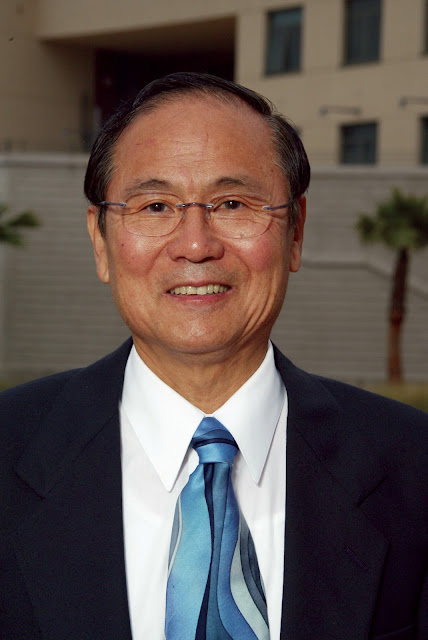
 |
| UCSB Chancellor Henry Yang |
As I reported yesterday, after years of documented misconduct, former University of California, Santa Barbara archaeologist Danielle Kurin has abruptly resigned the tenured position she was just awarded last August. Exactly what led to her resignation is still unclear, although it appears to be linked at least in part to issues that have been raised concerning her handling of human remains she claims belong to a missing teenager, a victim of the 2018 Montecito mudslide that took 23 lives. Neither Kurin, her attorney, nor UCSB are commenting so far on the reasons for her resignation, but many students and faculty at UCSB--along with other colleagues in the archaeology and anthropology communities--are celebrating her departure. One former student at UCSB was reported to have started jumping up and down with glee in his living room upon hearing the news of her resignation, and similarly jubilant reactions are widespread.
The celebrations are tinged with lingering suspicions, however, that the resignation might not be real and that somehow Kurin will re-emerge at UCSB or elsewhere. Those suspicions are not, however, the result of paranoia or the ascribing of magical powers of invincibility to this still junior researcher in her late thirties. Rather, they reflect a knowledge and understanding that Kurin has been enabled all these years by people who do have power of various kinds; and, that enabling has occurred despite full knowledge by these individuals of her serial abuses and her toxic, very psychologically disturbed personality.
In the end, Kurin has turned out to be a very sad case. She survived for many years in academia, both as a graduate student at Vanderbilt University and an assistant professor at UCSB, despite many acts of destruction and self-destruction along the way. Those included acts of retaliation against students that landed her with a three-year administrative leave and a Letter of Censure in her personnel file, only removed earlier this year but now made a permanent public document. And in the end, her desperate efforts to achieve tenure at UCSB despite her record of misconduct--including a 13 month long defamation suit against this reporter that may have cost her family $100,000 or more in attorneys' fees--may have led to her downfall, as her efforts to play local hero to the Santa Barbara community and to the family of missing teenager Jack Cantin appear to have backfired on her badly.
To many following this sordid saga, the Kurin v. Balter lawsuit might have seemed emblematic of two people who in various ways were obsessed with each other. Kurin certainly holds me responsible for the destruction of her career, even though her reputation was badly tarnished long before I had ever heard of her. As for me, I must say that I had moved on to other stories at the time that she sued me; the lawsuit forced me to focus a lot of my time and energies on her. It also made me determined that I would do everything I could, as a #MeToo advocacy journalist, to expose the truth about her abuses and help her victims get justice and the assurance that she would never be able to hurt anyone ever again.
It also made me determined to go beyond Kurin, an individual who would have been powerless without powerful enablers, and call to account the people and institutions who made her abuses possible over so many years. Lately, after focusing so much since the Harvey Weinstein revelations on celebrity abusers, the media have begun to take a closer look at those who have enabled them and their misdeeds. The just concluded Ghislaine Maxwell trial certainly raised those issues, as did earlier revelations about Jeffrey Epstein, whose continuing abuses were enabled by attorneys, scientists, and other hangers-on. Likewise, Harvey Weinstein could never have gotten away with his crimes--which finally put him in jail--without a coterie of enablers and sycophants who worshipped his power and granted him the right to abuse women.
In academia and the sciences, which get much less attention from the media but are often rampant with sexual harassment, bullying, and other abuses, institutions worried about their reputations or losing the grant funds that senior researchers bring in, and faculty worried about their careers or the opinions of their peers, often either looking the other way when informed of misconduct, or--even worse--siding with the abusers against survivors and gaslighting the victims into giving up their attempts to call them to account. I have been a #MeToo reporter for more than six years now, working on dozens of investigations. In every case, the abuser was enabled either by colleagues in their departments, by their institutions, or both.
It is this enabling, which is deeply embedded in our culture and institutions--from the corner McDonalds, to academia, to Hollywood, to the media, to government, and beyond--that must be addressed if the abuses are ever to stop. The enabling is itself made possible by unjustified imbalances in power and elite hierarchies that stifle the human spirit everywhere they are found. Individuals and institutions must be made responsible for their complicity, because without them the abusers would have no power or ability to carry out their acts.
So, in the case of former Associate Professor Danielle Kurin, let us take a look at who the enablers were.
The University of California and UCSB Chancellor Henry Yang.
Henry Yang has been Chancellor of UCSB since 1994. Thus he was the top responsible official at the university when, between 2014 and 2016, at least two students in Kurin's osteology classes complained of being bullied and humiliated by her both privately and in front of other students. In both cases, the alleged abuses were reported up the university administration chain, via deans and the ombudsman, but no disciplinary action against Kurin was taken--nor, to my knowledge, was she even issued a warning.
The timing is damning, because beginning in 2015 students at UCSB began demanding that Yang do more to deal with sexual assaults on campus, including by sitting in at his office. The general tenor of the news coverage at the time was very critical of Yang's failure to address the problem adequately. Two years later, students were again forced to confront Yang about continuing sexual assaults, and his reputation for lack of real concern about the problem continues to haunt his legacy at UCSB. Recently I have talked to members of the UCSB community who know Yang well; they tell me that his greatest fears include anything that brings bad publicity to the university, and lawsuits against the institution.
Perhaps it is no surprise, then, that when Kurin was found to have committed misconduct by a Title IX investigation (retaliation against students who reported her then partner and later husband for sexual harassment) and then formally charged with misconduct, she was not fired. This decision, which would have been Yang's alone to make, clearly illustrates his enabling of Kurin, since she went on later to commit still more misconduct, as I have reported.
Retaining Kurin at that time, even though firing her was a definite option, could not have been justified on any academically compelling grounds. She was still very early in her career and her time on the tenure track; she had yet to compile any kind of national or international record of stellar publication (indeed she never did, according to other archaeologists and anthropologists I have talked to); and she could have easily been replaced with other highly qualified candidates (including in her field of bioarchaeology, which is anything if not crowded.) Kurin did, however, sue the university in 2016, arguing that she should have received a promotion even though she was on administrative leave for misconduct. That lawsuit was resolved when Kurin engaged in a settlement with the university in March 2018.
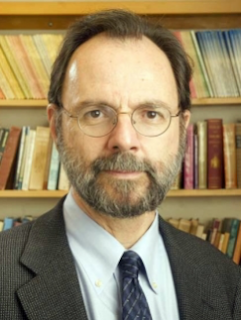 |
| UCSB Executive Vice Chancellor David Marshall |
Although the 2018 agreement was confidential, Kurin refers to it in her Amended Complaint against me in the Kurin v. Balter lawsuit. We received a copy of it as part of some 2000 pages of documents UCSB gave us in discovery in the lawsuit. UCSB insisted on keeping all of these documents confidential (except the "Letter of Censure" against Kurin, which it agreed to release at the request of Kurin and her attorney when her lawsuit against me was settled.) Rather than fight with the university for months over the unjustified sealing of these records, my attorneys and I agreed to a "protective order" which forbade us from releasing them publicly. However, I currently have a California Public Records Act request submitted to the university for release of the settlement and other documents.
The federal judge's protective order, however, makes clear that if I am able to access any of the documents or learn of their contents by other means, I am not prohibited from doing so. In the case of the settlement, sources have independently described its contents to me. For the purposes here, two clauses stand out:
1. Kurin agreed to undergo an extended period of psychotherapy as a condition of her returning to work.
2. Kurin agreed that if the university ever again found her to have committed misconduct, she could be terminated with no right of appeal.
The latter condition is obviously relevant to speculations about why she resigned her tenured position.
During this and other later events, Yang's second-in-command was Executive Vice-Chancellor David Marshall, pictured above. While I assume that he played key roles in everything related to Kurin, his own position regarding what the university should or should not do about her is not clear. Had the lawsuit continued, we would have taken his deposition and questioned him, along with Yang and other officials, under oath.
To return to Yang's role and attitudes: In July 2020, a student at Kurin's 2018 field school in Peru wrote to Chancellor Yang, using her real name, to describe how she had been sexually assaulted by Kurin's then-husband, Enmanuel Gomez Choque, and asking him to do something about the circumstances that had allowed this to happen. Neither Yang nor anyone on his staff ever responded to this student. I don't think I need to explain to readers here the callousness that this failure to even acknowledge the student's letter represents. Even more fundamentally, it goes directly to the issue of enabling, which Yang is clearly guilty of.
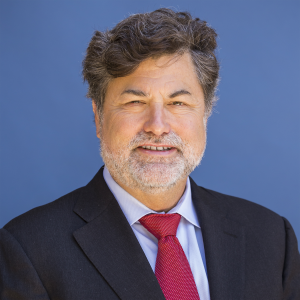 |
| Charles Hale, UCSB Dean of Social Sciences |
Of course, the greatest act of enabling of Kurin occurred when Chancellor Yang awarded Kurin tenure in August of last year, despite a clear recommendation against it by Kurin's anthropology department. Yang could not plead ignorance of Kurin's reputation in the department, and neither could David Marshall: A member of the department, Charles Hale (pictured above) is also the Dean of Social Sciences. Since Kurin returned to teaching in September 2019, Hale has been regularly apprised of her continuing abuses by students and faculty alike. Thus there was a direct conduit of information between the department, the executive vice-chancellor, and the chancellor about Kurin and her behavior.
Nevertheless, Yang rewarded Kurin for her years of abuses with a permanent tenured position. Since Kurin is in her late thirties and there is no mandatory retirement age in the University of California system, had she not resigned, she could have gone on for 40 or more years of contact with students and other colleagues--unchecked, as it were, unless she committed serious misconduct and the university chose to do something about it. In my previous post, I put forward various hypotheses for why Chancellor Yang might have done this. To those I would add one more: That the university told Kurin she could have tenure if she dropped the defamation suit against me, which was bringing a great deal of negative publicity to UCSB. Whether this is true, I do not know; but the lawsuit settled in July, and she was awarded tenure in August, one of the last faculty members at the entire university that the Chancellor finally decided on.
Before leaving the question of the responsibility of the university and its officials, it is important to mention the key role that the University of California General Counsel's office, based in Berkeley, played in decisions concerning Danielle Kurin. The key player here was Senior Counsel Michael Goldstein, who can be found in this massive office's organizational chart. Although any discussions between Goldstein and UCSB officials are subject to attorney-client privilege and thus beyond the scope of discovery and normal journalism, he had to have been aware of the attempts by Kurin and her counsel to withhold key evidence in the case. It is also a fair assumption that this office advised Yang to give Kurin tenure, if indeed he needed to be prompted to do so.
Smithsonian official and noted anthropologist Richard Kurin, father of Danielle.
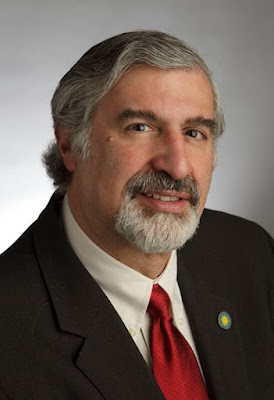 |
| Richard Kurin/ Smithsonian/ Wikimedia Commons |
Danielle Kurin's father, Richard Kurin, has been a direct and indirect enabler of Kurin's abuses since she was a graduate student at Vanderbilt University, and perhaps even earlier. That's because Danielle regularly invoked her father and his power in threats against fellow students, generating real and ongoing fear among her colleagues, then and now, that her father--a powerful scientist--could harm them and their careers in various ways (these would include during job searches, grant applications, and so forth.)
Had Danielle simply been boasting about her powerful father, the fears may not have taken hold. But in fact, Kurin told colleagues that her parents had paid for her 2016 lawsuit against the University of California, and there is every reason to think that he also bankrolled her recent defamation suit against me (Richard was very involved in the strategizing for that lawsuit all along its course. Danielle's sister, Jaclyn Kurin, an attorney who works for a prisoner's rights organization on the East Coast, was also involved.)
I mentioned earlier and in the previous post that Danielle Kurin's serious psychological issues were not only well known to her colleagues, but also formally recognized in her 2018 settlement with UCSB. I don't doubt that Kurin's family tried to get her the help she obviously needed; but by encouraging and even bankrolling a lawsuit against the journalist who was truthfully reporting her abuses, they clearly acted to enable not only an attempted coverup of her past misdeeds but also any future ones she might have committed or might still commit. (I would do almost anything for my own daughter, but that would not make it right.) Indeed, the lawsuit explicitly explained that Kurin had sued me so she could get tenure unhindered by my reporting. There is no ambiguity here.
One last thing about Richard Kurin: As described in the section below, Kurin and her attorney attempted to hide the smoking gun "Letter of Censure" from us. We were told by Kurin's attorney that Richard Kurin possessed a copy of this document, which may implicate him in this attempted coverup of key evidence.
Will Richard Kurin continue to help Kurin threaten colleagues as she attempts to continue whatever career she might be able to have now? (Not likely in U.S. academia.) I hope that this discussion of his role, along with the disastrous ending of the course that Danielle's family helped her set, will dissuade him from doing so, or at least help others (including the Smithsonian administration) to dissuade him.
David Scher and the Hoyer Law Group.
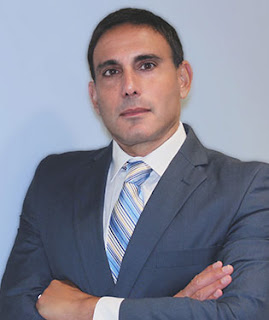 |
| Attorney David Scher |
David Scher of the Hoyer Law Group has represented Danielle Kurin for a number of years, and still does. Scher's specialty is not defamation law--a fact which showed clearly many times during his representation of Kurin--but rather whistleblower and employment law (especially false termination.) He is politically liberal, so it's unfortunate that he became a hired gun for the Kurin family in its attempts to stifle not only freedom of the press but also intimidate victims and survivors of Kurin's abuses. Whether he did it for the money or out of real sympathy for Kurin is for him to tell us.
As I mentioned in the previous post, Kurin's Amended Complaint against me was a litany of lies, up to and including clear perjury. I will not elaborate much more here, as over the past two years this blog has included a large number of posts about the various things that Kurin and Scher did to try to distort the record and bias the federal judge in the case against me. By the time the case settled, we had asked the court for sanctions against both Scher and Kurin for misconduct, and in particular for their attempts to hide the all-important Letter of Censure from us despite a clear legal obligation to produce it in discovery. As we told the court:
After filing our June 15 letter, we received additional documents from the University of California
Santa Barbara (“UCSB”) that showed that Plaintiff Danielle Kurin and her attorney improperly
sought to block from disclosure the Letter of Censure that UCSB issued against Dr. Kurin on
February 28, 2018. The Letter of Censure is a critical piece of evidence that Dr. Kurin has sought
to conceal from the outset of this matter (and successfully did so until June 4). She omitted any
reference to the Letter in her original or amended Complaints, thereby providing an extremely
misleading and false representation of the facts of this case. The Letter has been marked
“confidential” subject to the Protective Order of February 18, 2021 (“Feb. 18 Order”) and thus
cannot be described in detail in this public filing, but a copy can be provided in camera at the
Court’s request.
Accordingly, we seek to file motions requesting that 1) the Court remove the confidentiality
designation from the Letter of Censure (and other documents produced by UCSB that evidence
Dr. Kurin’s misconduct related to the allegations in this lawsuit) as permitted under Paragraph 11
of the Feb. 18 Order; and 2) that Dr. Kurin be sanctioned, including through dismissal of this
lawsuit, for intentionally seeking to destroy or conceal the Letter of Censure—key evidence in this
case.
This alleged misconduct was actually typical of how both Kurin and Scher behaved during the 13 months of the lawsuit. In essence, Kurin would tell a lie to Scher, who would pass it on to my attorneys without vetting it and doing due diligence to make sure that representations he made to us and to the court were accurate, to the best of his ability. Many of Scher's emails to my attorneys were clearly written by Kurin with only minimal editing. Had the case continued, we certainly would have asked the judge, as we did above, to lift the protective order on the UCSB documents. Having seen every page of them myself, I can say that they not only backed up my reporting 100%, but that there was absolutely no legitimate justification for making them secret--rather, the public interest should require that they be released in their entirely.
Of course, Kurin had the right to sue me for defamation if she really thought that I had defamed her, and she had the right to counsel to help her do it. One can also say that Jeffrey Epstein had the right to hire Alan Dershowitz to represent him against charges of sexual abuse and trafficking of minors, and Harvey Weinstein had the right to hire David Boies to help him in his legal fight. But an attorney passes from being a defender to being an enabler when they help a litigant engage in dishonest attempts to hide from the consequences of their misconduct and abuses. In one case, Scher had a process server go to the home of one of our witnesses despite a signal from us that we would accept service for her, in a blatant attempt to intimidate her and her family. This is the kind of attorney and law firm Kurin and her family hired to represent her.
In my Constitutionally protected, First Amendment opinion, David Scher was an enabler of abuse in the way he represented Danielle Kurin.
Update Jan 19: Scher’s propensity for simply repeating anything that Kurin tells him is illustrated by his comments in the story today in the Santa Barbara Independent about Kim Cantin’s lawsuit against the Santa Barbara Sheriff, in which he told the reporter that Kurin’s resignation had nothing to do with the mudslide case and that she left to pursue more “rewarding” work.
UCLA Cotsen Institute director Willeke Wendrich, former Institute for Field Research director Ran Boytner, and the IFR governing and academic boards.
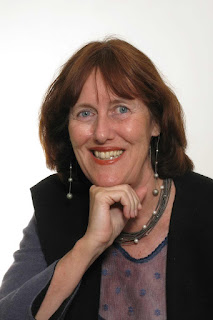 |
| Willeke Wendrich / UCLA |
Enablers gonna enable. If so, we must take the fight against abuses right to their doors.
The discussion above does not exhaust the list of enablers of Danielle Kurin. It also includes a well-known #MeToo advocate who was talking to Kurin's legal team for several months about testifying on her behalf (similar to the way that some officials of Time's Up were helping Andrew Cuomo attack sexual harassment survivors; a small group of anthropologists who were trying to discredit my reporting and block my exposures of abusers in that tightly knit field, for reasons I have discussed elsewhere and will write about at the appropriate time; and even a leading association of science writers, which allowed its complaint procedures to be exploited by those anthropologists and thus, willingly or inadvertently, helped Kurin's attempts to bias the judge in the defamation case against me. I will have more to say about all this in good time.
As I said at the beginning, Kurin is gone, her power to abuse students--at least for now--taken away. But her enablers are still around, still powerful, and--like enablers everywhere--they might help other abusers if they are not brought to account for what they did. Making those enablers accountable is the next step, and the next task, for those who want to create a world free of harassment, assault, bullying, and the other evils which have festered for way too long.
Update Jan 29, 2022: Yesterday, in response to a California Public Records Act to UCLA, I received documents indicating once again that Willeke Wendrich lied to her own colleagues, as well as to me, when she told them that she did not know about the 2016 Title IX proceeding against Danielle Kurin until at least 2018. As I will report in detail soon, at an October 2016 joint meeting of the governing and academic boards of the Institute for Field Research, then executive director Ran Boytner told the gathered colleagues that Kurin was under investigation by UCSB under Title IX, a fact which Kurin herself—who was present at the meeting as a member of the academic board—acknowledged to everyone. The board members were also told that Kurin was under administrative leave due to the Title IX. They decided to take no action as a result of these revelations, and in fact allowed Kurin to hold IFR field schools in both 2017 (not for credit) and 2018 (for credit) despite the fact that she continued to be on administrative leave.
Why the lies? As a student was sexually assaulted by Kurin’s then husband at the 2018 field school, one possibility is that they were advised by their legal counsel not to admit that they had known anything about Kurin’s history. It’s for them to tell us.
In addition to these documents, I now have testimony from sources present at this board meeting, as well as details of the minutes of the meeting, and I will provide further details about these events soon.

![The truth at last, or at least some of it, about Peter Rathjen, the U of Adelaide, the U of Melbourne, the U of Tasmania, etc. [Updated Sept 3, 2020: University of Melbourne "leader" finally speaks]](https://blogger.googleusercontent.com/img/b/R29vZ2xl/AVvXsEhTTYlLfJJPciFfe5iknlB2hbK8jYC5SDgoJTGaFKZBvgKVDAjUHzXjHFifYPzrixQgmQPW0Udsk6Y3OMLjmJd4rCxY352IA9Nwt2DlSscScArhuGqGpsiLozqx1A2xzK2I0_u_HOjwQlfn/w680/Rathjen.jpg)


37 Comments
There will be more silly comments like this, personal attacks on me, etc. as there is with every post on this blog. I will approve those that deserve to be seen and deserve a response, and reject the others.
All subjects of the reporting that no one takes seriously, but which turned out to be accurate. That’s because it is always done in collaboration with survivors who are looking for ways to tell their stories.
This is for those who are new to this blog.
By the way, your supporter tells me to go back to my hole.
I don’t have the power to fire anyone. What happens is that I report misconduct, based on serious first hand evidence, and then in some cases—not all—the institution launches its own investigation. The institution does the firing if it is convinced that the accusations are sound.
Yes, my “supporter” told you to go back to your hole. Perhaps that supporter is actually a victim of abuse whom I helped—who knows? If you can’t come up with anything more specific or constructive to this discussion, perhaps you should go back to your hole.
Again, tell us the case and what I got wrong, because my patience for people who waste the time of readers here does wear think eventually.
Instead they just go right into attacking me. That’s a dead giveaway that they don’t care a bit about the victims and survivors, but rather, in most cases, they are friends or colleagues or students or maybe even partners of accused abusers and defending them is all they care about.
I have to be very careful how I answer this question, because I have to separate out what I know about the role of the Academic Senate from the court documents we received in discovery and which are under a court protective order, and what I know from other sources. So I can’t be too specific.
What I can say is that the Academic Senate has been keenly aware of what at UCSB is often called “the Kurin problem” for a number of years. Kurin did not find the Senate to be a source of sympathy for her tenure bid. The decision to give Kurin tenure rested mainly with Chancellor Yang, who has made all the major decisions concerning Kurin since her Title IX proceeding in 2016 (with help from EVC David Marshall.)
I hope you are still monitoring this thread and so able to read this.
I am one of the victims (which I prefer to “survivor”) of one of those abusers that Balter reported on in this blog. For reasons that I cannot disclose, I know for a fact that it was Balter’s reporting that got that person fired after years and years of harassing people. And maybe like here, it wasn’t so much that the person’s enablers finally decided to do the right thing, but rather that the public exposure of their coverups would have run the risk of implicating them personally.
This is the reason why I trust Balter’s reporting, but, not to the point of blind faith. If you have any new information on why he made a mistake in this case or others, please do share it with us. If not, please stop meddling at once and let the other victims/survivors get the closure they deserve.
Alice said…
you are not getting much feedback here compared to other of your reports.
As mostly curious bystander here, I wonder if this has to do with commentators dreading the power and influence yielded at the hands of the aforementioned individuals. I noticed a similar lack of feedback when Balter reported on Kurin getting tenure, which by extension meant gaining more power to inflict damage on those who oppose her (even if anonymously.) In contrast, when he reported on her resignation and falling from grace— a flurry of comments. This is actually proving his point, that by hawking fear and encouraging silence, the system is set up to perpetuate abuse.
We know why you’re here and we know who you are.
I think it's difficult for people to comment on the administrators because they act with such secrecy. We don't know exactly what they did or didn't do because there's no transparency, and they fight any and all attempts to find out the truth.
Kurin, on the other hand, was never good at hiding her misdeeds, so people could easily see and comment on all her instances of harassment, lies, and retaliation.
We still want answers on her resignation. Were UCSB was happy to give her tenure when she was just harming students, but once her actions started affecting other local institutions, thus bringing more bad press, then goodbye? Were they so afraid of a lawsuit that they simply waited for her to screw up again, not caring about the additional harm it would cause?
These questions won't go away just because the administration wants to bury the whole debacle.
https://img1.wsimg.com/blobby/go/e72bdcc5-1a02-49b8-9727-1db180d76af9/Kurin_Bio-Bibliography_last%20edit_Sept_15_2020.pdf
“The UCSB anthropologist, Dr. Danielle Kurin, said her recent resignation was not related to the Cantin matter and instead was to pursue “a more fulfilling and meaningful job opportunity.”
So there you have it, dear students. Teaching you was not fulfilling and meaningful enough for her. I hope the person they replace her with will be more appreciative of this position.
I would like to explore the implications of the comment about academic and administrative process in the tenure decision. If I understand correctly, the settlement of 2018 (specifically #2 above) greatly weakened the value of tenure, in effect allowing the administration to fire Kurin if they found against her again at any time in the future. However, had she been denied tenure, UCSB would have had to allow her to teach another full year and perhaps more during the appeals process. Balter has intimated that there may have been another open case against Kurin since she returned to teaching; we don't know if this is the case, but it could explain why it took so long for Yang to make a decision. Perhaps he waited for a status update, and upon learning that things looked bad for Kurin, took the fastest road with least resistance for getting her out: just give her tenure and fire/give her the option to quit as soon as a report was ready. Again, as Balter has intimated, it could have involved the forensic case or perhaps something else.
Even if this was not what happened, the settlement provided an easy and relatively rapid way to get Kurin out if ever there was a violation of its terms. From the point of view of the administration, the 2018 settlement had her over a barrel, and tenure was no barrier to taking whatever action they might need in the future. So why not grant it, given that it could not protect her?
With what has been presented here, it is hard for me to see how the Dean enabled further abuse since the 2018 settlement. His job in the tenure review case would have been to certify what the department decided and add his own two cents. Perhaps he was informed of a legal strategy and process underway, perhaps not. We don't know what he wrote in his tenure letter. In the case of the Provost, under normal circumstances he might make the shots. But in this case, judging from other comments, he most likely was told to pass the file immediately to Yang. I think we would need much more concrete information than what has been presented here to accuse them of enabling since the 2018 settlement.
This is a very sad story and quite troubling. But there are many holes that need to be filled before blame should be spread. It seems that the path that was chosen proved to be the most effective and rapid way to leverage her out.
The one comment I would make is that the chronic lack of transparency from the administration all these years leaves us speculating about these matters and the motivations of the administrators. We might want to give events the most charitable interpretation, the least charitable, or something in between. But until and unless the administration comes clean about they did or did not do to protect students, no one can be blamed (in my view) for assuming the worst.
Also in my opinion, having seen so many documents relevant to these questions, there is NO justification whatsoever for secrecy for any of them, and I am currently pursuing efforts to get the university to make them public.
I don't know if "speculating" uncharitably about their motives is proper journalism. But I know enough about university administrations to state that this ad hominem approach won't promote transparency. The lawyers will circle the wagons. I don't see that as a step forward, but you are right that one is sorely needed.
First, as I have said repeatedly, I have seen with my own eyes the UCSB documents, currently under a court protective order, that inform my knowledge of what the administration did. I cannot quote them, but I cannot forget them either.
Second, the university will, as always, try to hide away the truth. But the last word will come from the courts which will interpret the California Public Records Act, and hopefully enforce its spirit and its letter.
https://www.independent.com/2022/01/24/ucsbs-chancellor-yang-gets-28-4-percent-pay-raise/
Michael, you do not have to give the abusers and their sock puppets in this website. They just drain energy and abuse others.